In Latin America, the motorcycle has long become part of daily life. It carries couriers, tradespeople and office workers, and more and more weekend riders. Established names such as Honda and Yamaha remain major players across Latin America. But demand is growing faster than the choice of brands, and newer manufacturers, including Sharmax Motors, are starting to gain ground in several markets.
A work tool first
For many people in the region, a motorcycle is first of all a way to earn a living. It costs less than a car to buy, insure and fuel, it moves through traffic that stops other vehicles, and it can be paid for in small installments.
The numbers in Mexico are striking. Expansión reports that motorcycle sales are expected to reach 2.2 million units in 2026, against about 1.6 million light vehicles. Before 2020, the market moved between 800,000 and 850,000 units a year. Around 80% of the motorcycles sold are used for self-employment. The country’s motorcycle fleet reached 10.5 million registered units at the end of 2025, up 17.8% in a year, according to INEGI figures cited by the Mexican motorcycle show SIMM.
Delivery platforms have added to this. Services such as Rappi, Uber Eats, DiDi Food and Mercado Libre have created a large group of riders who use a motorcycle every day to make a living. Mexican authorities say more than a million drivers and delivery workers have been registered for social security under a pilot scheme for platform workers. Their priorities are simple: low running costs, easy access to spare parts and a price that pays for itself quickly.
From necessity to hobby
A second driver is the growth of the middle class. Some buyers now want more than basic transport, and larger road bikes, adventure models and riding clubs are increasingly visible in Mexico, Colombia and Chile. The same Expansión report notes that high-displacement motorcycles are increasingly bought for recreation. For these riders, the motorcycle is both the commute and the weekend escape.
Not enough choice
The supply side has been slower to change. The market is concentrated in a few brands. One recent industry report says Italika sells about seven in ten motorcycles in Mexico, while the industry association AMFIM says its 12 member brands account for 95% of the market.
Demand is also heavily weighted towards basic models. According to the industry association AMFIM, about 70% of the motorcycles on Mexican roads have engines of 125 cc or less, and a further 25% are between 126 and 250 cc, which leaves little room for larger bikes. These models are also the cheapest: a low-displacement motorcycle costs between 30,000 and 35,000 pesos, against around 250,000 for an entry-level car. A dealer tied to one dominant brand cannot easily serve both the courier who needs the cheapest reliable bike and the enthusiast who wants something different.
How Sharmax is finding its place in the growing market
Sharmax Motors is one of the motorcycle brands moving into this space in a tight Latin American market. It is a global motorcycle and powersports manufacturer founded in Italy in 2014. Over the past decade, it has expanded across the Middle East, Europe and Asia. Its portfolio covers road and off-road motorcycles, ATVs, buggies, golf carts and personal watercraft.
Mexico has become one of its main entry points into Latin America. The company announced its arrival in 2025 and said it had recorded more than 5,100 vehicle sales in the country before it opened its first official showroom, in Mexico City’s Santa Fe district, in December 2025. A second Mexico City location followed in July 2026.
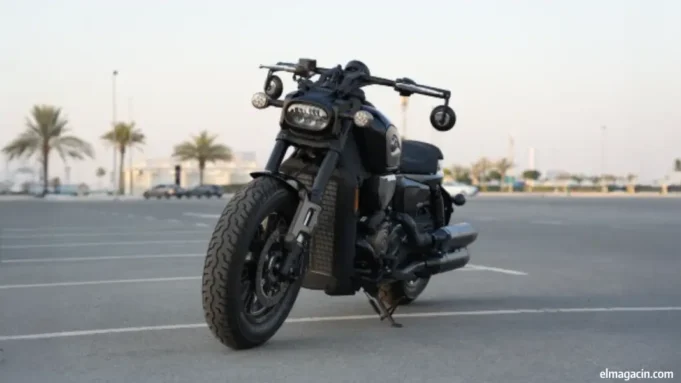
Its motorcycle range is wide. It includes everyday road bikes, naked motorcycles, cruisers, and sport and touring models. Scooters range from compact city models to larger maxi-scooters, and the off-road line-up includes enduro and pit bikes.
The company points to several advantages:
- Range and affordability. The company came to the market to cover the full spectrum, from commuter bikes for couriers and daily riders to high-performance motorcycles for tourers and weekend riders, at competitive prices. That lets one brand serve very different buyers without pricing the entry level out of reach.
- Equipment for the price. Models are offered at different price and specification levels. On selected motorcycles, Sharmax uses components from established suppliers such as Brembo, Marzocchi and Bosch, while keeping prices below many comparable models from longer-established brands. The company says the aim is not just to undercut rivals but to offer more equipment at a price that keeps motorcycling within reach of more riders.
- After-sales support. Sharmax vehicles come with a three-year warranty, supported by dedicated service facilities and locally available spare parts. For working riders, this is often as important as the purchase price.
What comes next
Sharmax plans to build on its growth in Mexico and expand further across Latin America. Colombia, Peru and Central America share many of the same demand drivers. Brazil is another major market on the company’s radar.
The next step is to bring the same broad product range, local support and spare-parts network to more countries across the region.